


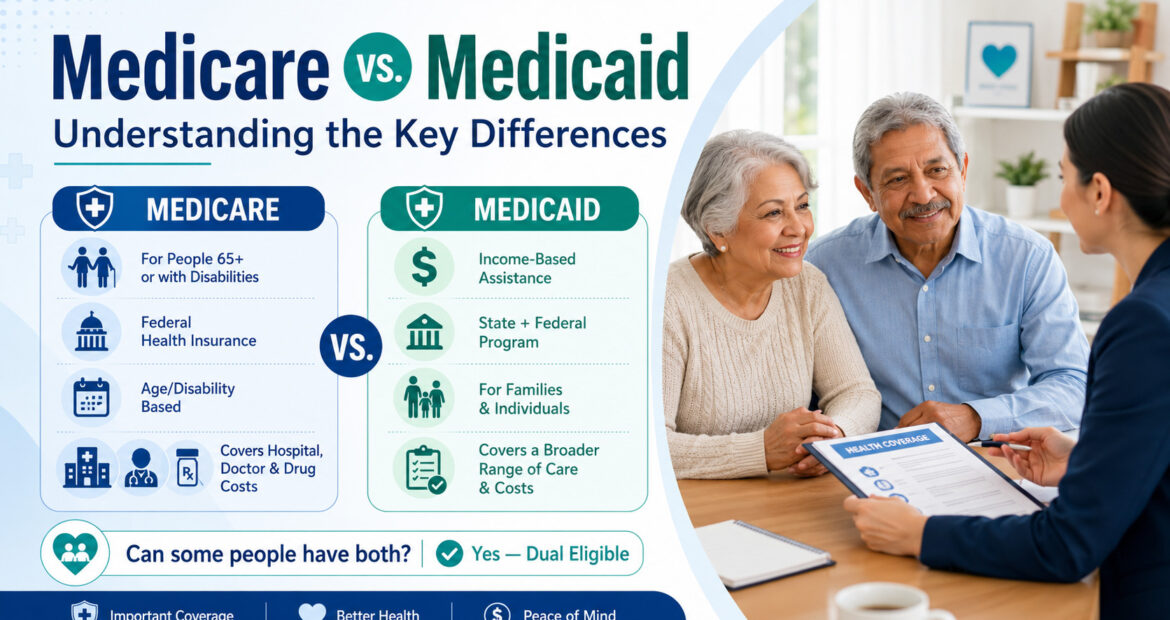
Many people confuse Medicare and Medicaid because both are government healthcare programs. However, they are designed for different purposes and serve different groups of people.
Understanding the difference between Medicare and Medicaid can help you better understand which program you may qualify for, what coverage may be available, and how each program can help with healthcare costs.
What Is Medicare?
Medicare is a federal health insurance program mainly designed for:
- People age 65 and older
- Certain younger individuals with disabilities
- People with End-Stage Renal Disease, also known as ESRD
- People with ALS
Medicare eligibility is generally based on:
- Age
- Disability status
- Work history
In most cases, Medicare is not based on income.
The Different Parts of Medicare
Medicare is divided into different parts. Each part helps cover different types of healthcare services.
Medicare Part A
Medicare Part A helps cover:
- Hospital stays
- Skilled nursing facility care
- Hospice care
- Some home health services
Medicare Part B
Medicare Part B helps cover:
- Doctor visits
- Outpatient care
- Preventive services
- Durable medical equipment
Medicare Part D
Medicare Part D helps cover prescription drug costs. These plans are offered by private insurance companies approved by Medicare.
Medicare Advantage, also known as Part C
Medicare Advantage plans are private insurance plan options that provide Medicare benefits. These plans often combine Part A and Part B coverage, and many also include prescription drug coverage.
Some Medicare Advantage plans may also offer extra benefits such as:
- Dental coverage
- Vision coverage
- Hearing coverage
- Wellness benefits
Plan benefits, costs, and availability can vary depending on your area.
What Is Medicaid?
Medicaid is a healthcare assistance program funded by both the federal government and individual states. It is designed to help people with limited income and resources get access to healthcare coverage.
Medicaid eligibility is usually based on:
- Income
- Household size
- Financial need
- State-specific rules
Medicaid may help cover services such as:
- Doctor visits
- Hospital care
- Long-term care
- Nursing home care
- Prescription drugs
- Certain services not fully covered by Medicare
Because Medicaid is run by both federal and state governments, eligibility rules and benefits can vary from state to state.
Key Differences Between Medicare and Medicaid
Although Medicare and Medicaid both help with healthcare costs, they are not the same.
Medicare
Medicare is mainly for seniors and certain people with disabilities.
It is a federal program, which means the basic rules are the same across the country. Medicare eligibility is usually based on age, disability status, or certain medical conditions.
Medicare may include monthly premiums, deductibles, copayments, and coinsurance.
Medicaid
Medicaid is designed for individuals and families with limited income and resources.
It is run by both the federal government and each state. This means Medicaid rules, benefits, and eligibility requirements can be different depending on where you live.
For many people who qualify, Medicaid may have little to no monthly cost.
An Easy Way to Understand the Difference
A simple way to think about the difference is this:
Medicare is mainly health coverage based on age or disability. Medicaid is financial assistance based mostly on income and need.
Medicare helps provide healthcare coverage for older adults and certain people with disabilities. Medicaid helps people who meet income and resource requirements pay for healthcare and related services.
Can Someone Have Both Medicare and Medicaid?
Yes. Some people qualify for both Medicare and Medicaid. These individuals are often called dual eligible.
When someone has both programs:
- Medicare usually pays first
- Medicaid may help pay for costs Medicare does not fully cover
- Medicaid may help with premiums, deductibles, copays, and other healthcare expenses
Having both Medicare and Medicaid can help reduce out-of-pocket healthcare costs and provide broader support.
Why This Matters
Understanding the difference between Medicare and Medicaid is important because each program works differently.
Choosing the right coverage, knowing what help is available, and understanding your eligibility can make a big difference in your healthcare costs.
Final Thoughts
Medicare and Medicaid are both important government healthcare programs, but they are not the same.
Medicare is mainly based on age, disability, or certain medical conditions.
Medicaid is mainly based on income, household size, and financial need.
Some people may qualify for both programs, which can provide additional help with healthcare costs. If you are unsure which program applies to you, speaking with a licensed insurance agent or healthcare coverage professional can help you better understand your options.