

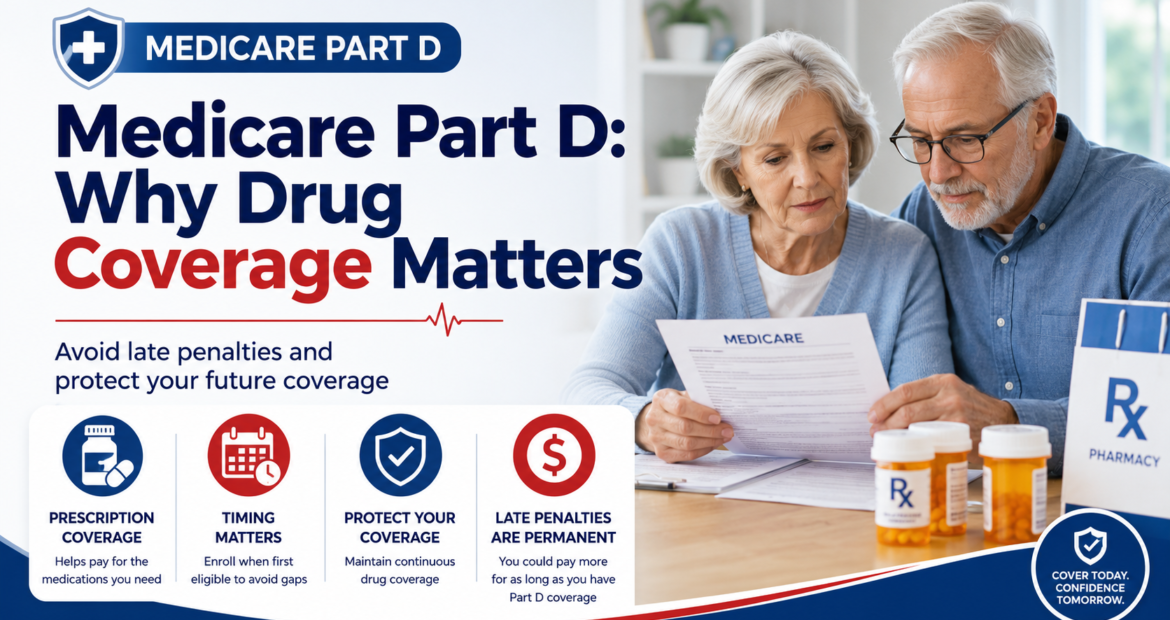
Many people assume they can skip prescription drug coverage if they currently take few or no
medications. However, delaying Medicare drug coverage can result in permanent penalties and
future coverage problems.
What Is Medicare Part D?
Part D is Medicare’s prescription drug coverage program.
You can receive Part D coverage through:
● A standalone prescription drug plan
● A Medicare Advantage plan that includes drug coverage
Why Drug Coverage Matters
Even if you currently take no medications, enrolling when first eligible can help you:
● Avoid late enrollment penalties
● Maintain future coverage options
● Protect against unexpected health changes
The Part D Late Enrollment Penalty
If you go without creditable prescription drug coverage for too long after becoming eligible,
Medicare may charge a permanent late enrollment penalty.
The penalty is generally added to your Part D premium for as long as you have drug coverage.
What Counts as Creditable Coverage?
Creditable coverage means your existing prescription drug coverage is considered at least as
good as standard Medicare drug coverage.
Examples may include:
● Certain employer plans
● Union coverage
● VA drug coverage
Employer Coverage and the 20-Employee Rule
If you continue working past age 65, employer coverage may allow you to delay Medicare
enrollment.
However, employer size matters.
Generally:
● Employers with 20 or more employees may allow delayed enrollment without penalties
● Smaller employer plans may not provide the same protection
It is important to confirm whether your coverage is considered creditable.
When Do You Need to Enroll After Losing Coverage?
Once you lose employer drug coverage, you generally have a limited Special Enrollment Period
to enroll in Medicare drug coverage without penalties.
Waiting too long can create permanent extra costs.
Penalty Timeline Examples
Example 1 — Waiting 12 Months
Tom delays Part D coverage for 12 months after becoming eligible and has no creditable
coverage. Medicare calculates a penalty that is added to his monthly premium permanently.
Example 2 — Waiting 26 Months
Linda goes over two years without creditable drug coverage. Her penalty becomes significantly
larger because the calculation increases monthly based on the length of the delay.
Example 3 — Waiting 36 Months
Robert waits three years to enroll. His penalty continues for as long as he keeps Medicare drug
coverage.
Why Annual Reviews Matter
Prescription drug plans change yearly.
Things that may change include:
● Covered medications
● Pharmacy networks
● Copays
● Formularies
Reviewing your coverage annually can help avoid unexpected costs.
Frequently Asked Questions
What if I don’t take medications now?
You may still want coverage to avoid future penalties and protect yourself if your health changes
unexpectedly.
Can I change drug plans later?
Yes. Most people can review and change plans during the Annual Enrollment Period each year.
Is the Part D penalty temporary?
No. In most cases, the penalty lasts as long as you have Medicare drug coverage.