


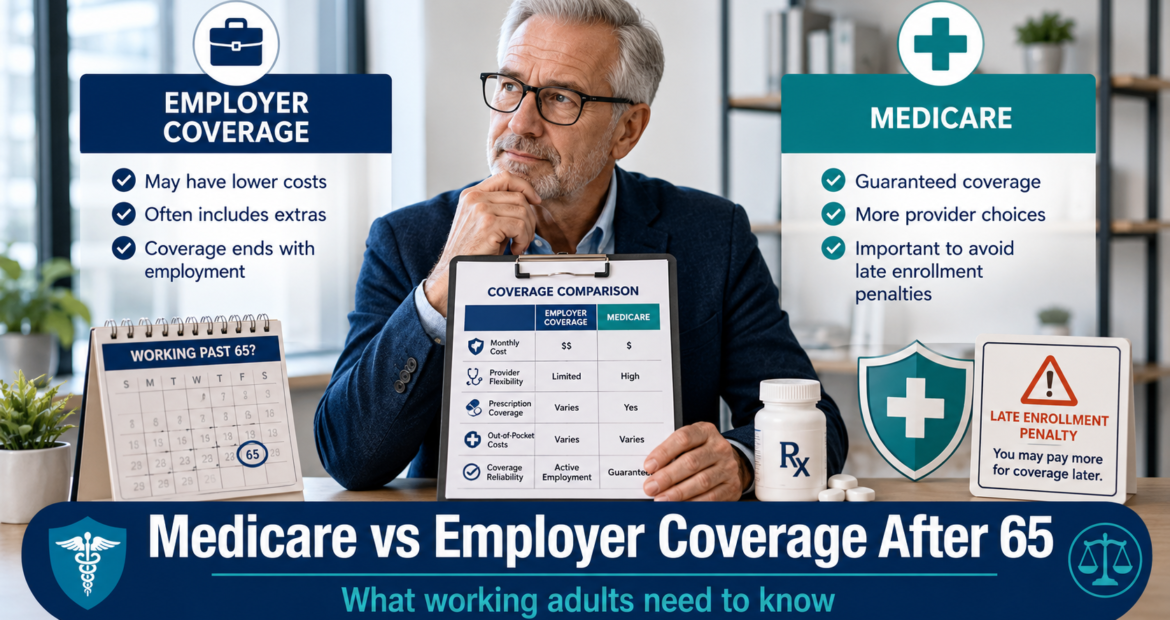
Many people continue working past age 65 and wonder whether they should enroll in Medicare
or stay on their employer health insurance. The answer depends on several important factors,
including your employer size, the type of coverage you have, and whether your prescription
drug coverage is considered creditable.
Making the wrong decision can lead to:
● Lifetime Medicare penalties
● Gaps in coverage
● Unexpected medical bills
● Delays in enrollment
Understanding how Medicare works with employer insurance can help you avoid expensive
mistakes.
Yes — You Can Have Medicare While Still
Working
Turning 65 does not mean you must retire before enrolling in Medicare.
Many people:
● Continue working full-time
● Keep employer coverage
● Delay certain parts of Medicare
● Use Medicare alongside their work insurance
The key is understanding whether you should enroll in:
● Part A
● Part B
● Part D prescription coverage
because each works differently with employer insurance.
Should You Compare Medicare Coverage
to Your Employer Plan?
Many people automatically assume their employer insurance is the better option simply because
they’ve had it for years. However, once you become eligible for Medicare, it is important to
compare both coverage options carefully.
In some situations, Medicare may offer:
● Lower monthly costs
● More predictable healthcare spending
● Broader access to providers
● Additional coverage options through private plans
● More flexibility in how you receive care
The right choice depends on your:
● Healthcare needs
● Prescriptions
● Budget
● Preferred doctors and hospitals
● Travel habits
● Retirement timeline
Make sure you aren’t limiting your options and do a side by side comparison. Everyone’s needs
and current plans are different!
Medicare May Sometimes Cost Less Than
Employer Coverage
Employer insurance premiums can increase significantly as employees age, especially for
dependent or family coverage.
Some individuals find that Medicare:
● Reduces monthly premium costs
● Lowers deductibles
● Creates more predictable out-of-pocket expenses
This is especially true when beneficiaries combine Medicare with other coverage options
designed to help manage healthcare costs.
Example
Mark is 66 and still working. His employer plan has:
● A high deductible
● Increasing payroll deductions
● Large copays for specialist visits
After comparing costs, he discovers Medicare may provide more manageable healthcare
expenses during retirement.
Medicare Gives Beneficiaries Different
Ways to Receive Coverage
One important difference between employer insurance and Medicare is flexibility.
With Medicare, beneficiaries can choose among:
● Original Medicare
● Prescription drug coverage
● Supplemental coverage options
● Private Medicare health plan alternatives approved by Medicare
This allows individuals to select coverage that better matches their personal healthcare needs
and financial goals.
Personalized Support and Guidance
Many Medicare beneficiaries appreciate the amount of educational support available during
enrollment and plan reviews.
Resources may include:
● Medicare educational materials
● Licensed insurance professionals
● State Health Insurance Assistance Programs (SHIP)
● Medicare customer service support
● Annual plan review opportunities
Because healthcare needs can change over time, reviewing your options regularly can help
ensure your coverage continues to fit your situation.
Important Considerations When
Comparing Coverage
When evaluating employer insurance versus Medicare, compare:
● Monthly premiums
● Deductibles
● Provider access
● Prescription drug coverage
● Maximum out-of-pocket exposure
● Referral requirements
● Coverage while traveling
Looking only at premium costs may not provide the full financial picture.
Coverage Needs Often Change After Age
65
As people transition into retirement, healthcare priorities often shift.
Some individuals want:
● Greater provider flexibility
● More predictable costs
● Simpler coverage structures
● Additional healthcare support services
Reviewing Medicare alongside employer coverage can help identify which option best aligns
with your future healthcare needs.
Important Reminder
Every situation is different. The best choice depends on:
● Your employer plan details
● Your medical needs
● Your prescription costs
● Your retirement plans
● Your budget
Before making a decision, consider speaking with:
● Your employer’s HR department
● Medicare
● A licensed Medicare professional
● A trusted financial advisor if needed
Carefully comparing your options before enrolling can help you avoid unnecessary costs and
ensure you choose coverage that fits your long-term healthcare goals.
However, enrolling in any part of Medicare may affect Health Savings Account (HSA)
contributions.
Important HSA Warning
Once Medicare begins, you generally can no longer contribute to an HSA without potential tax
penalties. To be clear, you CAN still utilize your HSA, but you will no longer be able to contribute
to it without potentially facing those penalties. Read our article on HSAs and Medicare for more
information.
Medicare Part B (Medical Insurance)
Part B covers:
● Doctor visits
● Outpatient care
● Preventive services
● Durable medical equipment
Part B usually has a monthly premium, which is why many working individuals consider delaying
it if they already have employer coverage.
Whether delaying Part B is safe depends heavily on your employer size.
The Most Important Rule: Employer Size
Matters
If Your Employer Has 20 or More Employees
In many cases:
● Your employer insurance pays first
● Medicare becomes secondary
This usually allows you to delay Medicare Part B without penalties while you remain actively
employed and covered under the group health plan.
Example
Susan is 66 and still working for a company with 300 employees. She keeps her employer
insurance and delays Part B to avoid paying the monthly premium.
When she retires later, she qualifies for a Special Enrollment Period to enroll in Part B without
penalties.
If Your Employer Has Fewer Than 20 Employees
This situation becomes much more important.
In many cases:
● Medicare becomes primary
● Employer insurance becomes secondary
If you do not enroll in Part B when first eligible, your employer plan may refuse to pay certain
claims because Medicare should have been your primary insurance.
Example
Tom turns 65 while working for a company with 12 employees. He keeps only employer
coverage and delays Part B.
Later, he discovers his employer plan expected Medicare to pay first, leaving him responsible
for large medical bills.
What Is Creditable Coverage?
Creditable coverage means your employer insurance is considered at least as good as
Medicare coverage.
This is especially important for:
● Part D prescription drug coverage
● Avoiding late enrollment penalties
Ask your employer’s HR department for:
● Written proof of creditable prescription drug coverage
● Confirmation of how the plan works with Medicare
Can I Delay Medicare Part B?
You may be able to delay Part B if:
● You are actively working
● You have employer group health coverage
● The coverage is based on current employment
● The employer meets Medicare coordination requirements
If these conditions apply, you may qualify for a Special Enrollment Period later.
What Is the Special Enrollment Period
(SEP)?
If you delayed Part B because of active employer coverage, Medicare usually gives you an
8-month Special Enrollment Period to enroll later without penalties.
The SEP Starts When:
● Employment ends OR
● Employer coverage ends
(whichever happens first)
Important Warning
COBRA and retiree coverage generally do NOT count as active employer coverage for delaying
Part B penalties.
The Two Important Medicare Forms You
May Need
Form CMS-40B
Application for Enrollment in Medicare Part B
This form is used to enroll in Part B if you delayed it previously.
Form CMS-L564
Request for Employment Information
This form verifies that you had employer health coverage while delaying Part B. Your employer
completes part of this form.
For more information, go to the “How to Apply for Medicare” article on our site.
Example of Delaying Part B Correctly
Karen turns 65 and continues working for a large employer.
She:
- Enrolls in premium-free Part A
- Delays Part B
- Keeps employer coverage
- Retires at age 68
- Completes CMS-40B
- Has employer complete CMS-L564
- Enrolls in Part B during her SEP without penalties
Should I Enroll in Part A While Working?
Many people choose to enroll in premium-free Part A at age 65 even if they delay Part B.
However, you should carefully evaluate:
● HSA contribution rules
● Employer plan coordination
● Future healthcare needs
Some individuals delay all Medicare enrollment to preserve HSA eligibility.
What About Prescription Drug Coverage?
If your employer drug coverage is considered creditable, you may be able to delay Part D
without penalties.
If it is NOT creditable, delaying Part D may create:
● Permanent late enrollment penalties
Always request written proof from your employer.
Common Mistakes to Avoid
Assuming All Employer Coverage Is Enough
Employer size and plan rules matter.
Missing the Special Enrollment Period
The SEP only lasts 8 months.
Forgetting About Part D Penalties
Drug coverage rules are separate from Part B.
Not Checking HSA Rules
Medicare enrollment can affect HSA contributions.
Relying on COBRA Alone
COBRA does not usually protect you from Part B penalties.
Questions to Ask Your Employer HR
Department
Before deciding, ask:
● Is my coverage creditable for Medicare Part D?
● Does my plan work as primary or secondary to Medicare?
● How many employees does the company have?
● Will my coverage change once I turn 65?
● Can I keep my spouse on the employer plan if I move to Medicare?
Frequently Asked Questions
Can I have both Medicare and employer insurance?
Yes. Many people use both together.
Do I need Medicare if I’m still working?
It depends on your employer size and coverage type.
Is Part A free?
Many people qualify for premium-free Part A based on work history.
Can I delay Part B without penalties?
Possibly, if you have qualifying employer coverage based on current employment.
What happens if I make the wrong choice?
You could face:
● Permanent penalties
● Coverage gaps
● Higher medical costs
Final Takeaway
If your employer offers health insurance, you may still be eligible for Medicare — but deciding
whether to enroll immediately depends on your specific situation.
The most important factors are:
● Employer size
● Whether your coverage is creditable
● Whether you contribute to an HSA
● How long you plan to continue working
● The pros and the cons of your current health plan
Before delaying Medicare, verify your coverage carefully with both:
● Your employer’s HR department
● A licensed insurance agent
Making the right decision at age 65 can help you avoid lifelong penalties and costly coverage
gaps.