

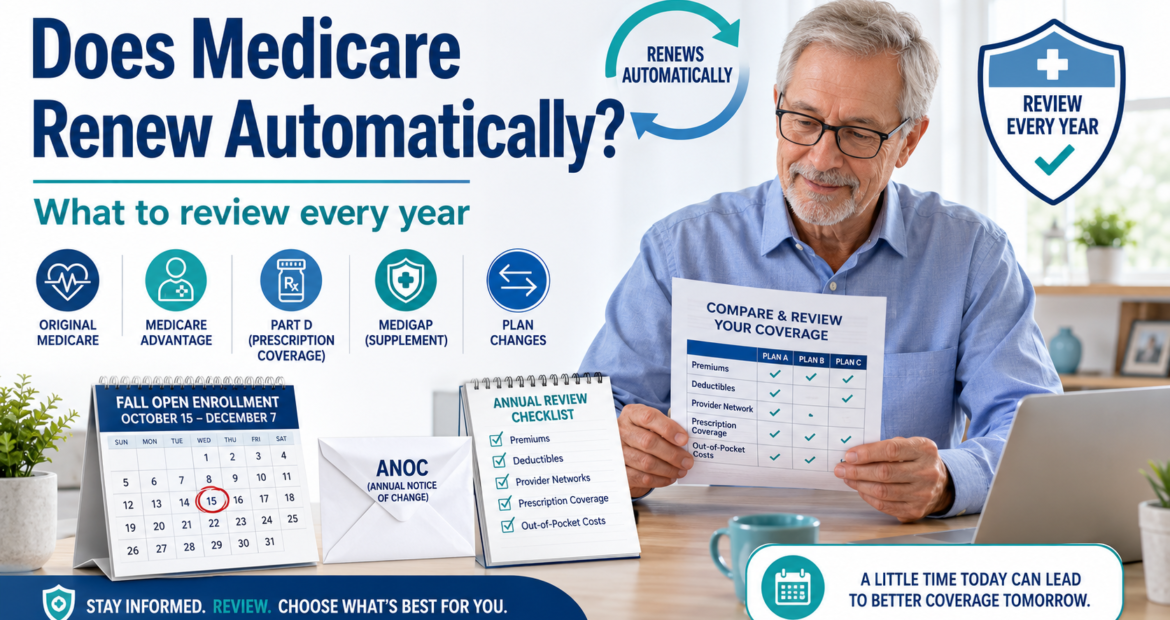
One of the most common questions people ask after enrolling in Medicare is:
“Do I have to renew my Medicare every year like regular health insurance?”
The short answer is:
Usually, No.
For most people, Medicare coverage renews automatically each year. Once you enroll, your
coverage generally continues as long as you remain eligible and continue paying any required
premiums.
However, that does not mean you should ignore your coverage every year.
Medicare plans, prescription drug coverage, provider networks, premiums, and benefits can all
change from year to year. Even though you may not need to formally “renew,” it is still important
to review your plan annually.
This guide explains exactly how Medicare renewals work, when you need to take action, and
what you should review every fall.
Does Original Medicare Renew
Automatically?
Yes.
If you have:
● Medicare Part A (Hospital Insurance)
● Medicare Part B (Medical Insurance)
Your coverage usually continues automatically every year.
You do not need to fill out renewal forms or reapply annually.
As long as:
● You remain eligible for Medicare
● You continue paying your Part B premium (if required)
Your coverage stays active.
For many people, Part B premiums are automatically deducted from Social Security benefits.
Do Medicare Advantage Plans Renew
Automatically?
Usually, yes.
If you are enrolled in a Medicare Advantage plan (Part C), your plan will typically renew
automatically each January.
You generally do not need to do anything if:
● Your plan is still being offered in your area
● You continue paying any required premiums
● You want to keep the same plan
However, Medicare Advantage plans can change every year.
That means:
● Your doctors may leave the network
● Prescription drug coverage may change
● Copays and deductibles may increase
● Extra benefits may be added or removed
● Premiums may increase
Even though renewal is automatic, many people discover too late that their favorite doctor or
medication is no longer covered the same way.
Does Medicare Part D Renew
Automatically?
Yes, most Medicare Part D prescription drug plans automatically renew each year.
But this is one area you should review very carefully every fall.
Drug plans can change:
● Covered medications (formularies)
● Pharmacy networks
● Deductibles
● Monthly premiums
● Copays
A prescription that was affordable this year could become much more expensive next year.
Even if you take the same medications, it is smart to compare plans annually. Formularies (the
list of drugs the insurance company will or will not cover) change yearly, so a medication you
take that was covered last year may not be the next or the level of coverage could change. It’s
always in best practice to do an annual policy review with your agent to go over any changes.
Does Medigap Renew Automatically?
Yes.
Medigap (Medicare Supplement Insurance) plans generally continue automatically unless:
● You stop paying premiums
● You cancel the policy
● The insurance company stops offering the plan
Unlike Medicare Advantage and Part D plans, Medigap policies are not usually tied to annual
enrollment renewals.
However, premiums may still increase over time.
Why Do So Many People Think Medicare
Must Be Renewed Every Year?
Many people confuse:
● Annual Enrollment Periods with
● Required yearly renewals
They are not the same thing.
Medicare Annual Enrollment Period (AEP)
Every year from:
October 15 through December 7
Medicare beneficiaries can:
● Switch Medicare Advantage plans
● Change Part D drug plans
● Move from Original Medicare to Medicare Advantage
● Return from Medicare Advantage to Original Medicare
This period exists so people can review and update coverage if needed.
It does not mean everyone must re-enroll.
If you are happy with your current coverage and your plan is still available, you can usually keep
it automatically.
When DO You Need to Take Action?
Although Medicare usually renews automatically, there are situations where you should act.
- Your Plan Is Ending
Sometimes insurance companies stop offering a Medicare Advantage or Part D plan.
If that happens:
● You will receive a notice
● You may need to choose a new plan
● You could be automatically assigned to another option if you do nothing
Never ignore letters from Medicare or your insurance company. - Your Doctors Leave the Network
Especially with Medicare Advantage plans, provider networks can change every year.
If your preferred:
● Doctor
● Hospital
● Specialist
● Pharmacy
Leaves the network, your costs could increase substantially. - Your Prescription Costs Change
Part D drug plans often change formularies and pricing annually.
One medication can dramatically change the total yearly cost of your plan.
That is why many Medicare experts recommend reviewing prescription drug coverage every
single year — even if your medications stay the same. - Your Premiums or Copays Increase
Plans sometimes advertise low premiums but increase:
● Deductibles
● Specialist copays
● Out-of-pocket maximums
A plan that worked well last year may not be the best value next year. - You Move to Another State or Service Area
If you relocate, your Medicare Advantage or Part D plan may no longer be available.
Moving can trigger a Special Enrollment Period that allows you to change coverage.
What Is the Annual Notice of Change
(ANOC)?
Every fall, Medicare Advantage and Part D plan members receive a document called the:
Annual Notice of Change (ANOC)
This notice explains changes for the upcoming year, including:
● Premiums
● Deductibles
● Copays
● Covered drugs
● Provider networks
● Extra benefits
Many people throw this document away without reading it.
That can lead to surprise medical bills or coverage problems the following year.
Always review your ANOC carefully.
Should You Review Medicare Every Year
Even If Renewal Is Automatic?
Absolutely.
Even though Medicare usually renews automatically, annual reviews can save money and
prevent coverage problems.
You should review:
● Prescription coverage
● Doctor networks
● Premium changes
● Copays
● Dental, vision, and hearing benefits
● Maximum out-of-pocket costs
Your health needs can change over time, and Medicare plans change constantly.
Common Medicare Renewal Myths
Myth #1: “If My Plan Renewed Automatically, Nothing
Changed.”
False.
Plans can renew automatically while still changing:
● Costs
● Coverage
● Networks
● Drug formularies
Myth #2: “I Have to Re-Enroll Every Year.”
False.
Most Medicare coverage continues automatically.
Annual Enrollment is optional unless you want or need to make changes.
Myth #3: “If I Ignore Medicare Mail, Everything Will Stay
the Same.”
False.
Insurance companies regularly adjust plans.
Ignoring notices can cause:
● Higher drug costs
● Lost doctor access
● Coverage gaps
● Unexpected bills
Myth #4: “My Prescription Plan Will Always Cover My
Medications.”
False.
Drug formularies can change every year.
Even if a medication remains covered, the copay tier may change.
What Happens If You Do Nothing During
Open Enrollment?
In most cases:
● Your Medicare coverage continues automatically
● Your Medicare Advantage or Part D plan renews for the new year
However, you will also automatically accept any changes made to the plan.
That is why reviewing your options every year is important.
Tips During Medicare Open Enrollment
Compare Drug Plans Every Year
Even small medication changes can significantly affect total yearly costs.
Check Your Doctors
Always confirm your:
● Primary doctor
● Specialists
● Hospitals
● Pharmacies
Remain in-network.
Review Maximum Out-of-Pocket Costs
A low monthly premium does not always mean lower total healthcare costs.
Read Every Medicare Letter
Especially:
● Annual Notice of Change (ANOC)
● Evidence of Coverage (EOC)
● Plan termination notices
Ask Questions
Licensed Medicare agents, SHIP counselors, and Medicare resources can help you compare
plans.
Final Thoughts
Most people do not need to formally renew Medicare every year.
Original Medicare, Medicare Advantage, Part D prescription plans, and Medigap policies usually
renew automatically.
But automatic renewal does not mean your coverage stays the same.
Every year, Medicare plans can change:
● Costs
● Drug coverage
● Doctor networks
● Benefits
● Premiums
That is why reviewing your Medicare coverage with your agent each fall is one of the smartest
things you can do.
Even a quick yearly review can help you:
● Save money
● Keep your doctors
● Protect prescription coverage
● Avoid surprise medical bills
The best Medicare plan is not always the one you chose years ago — it is the one that still fits
your needs today.